

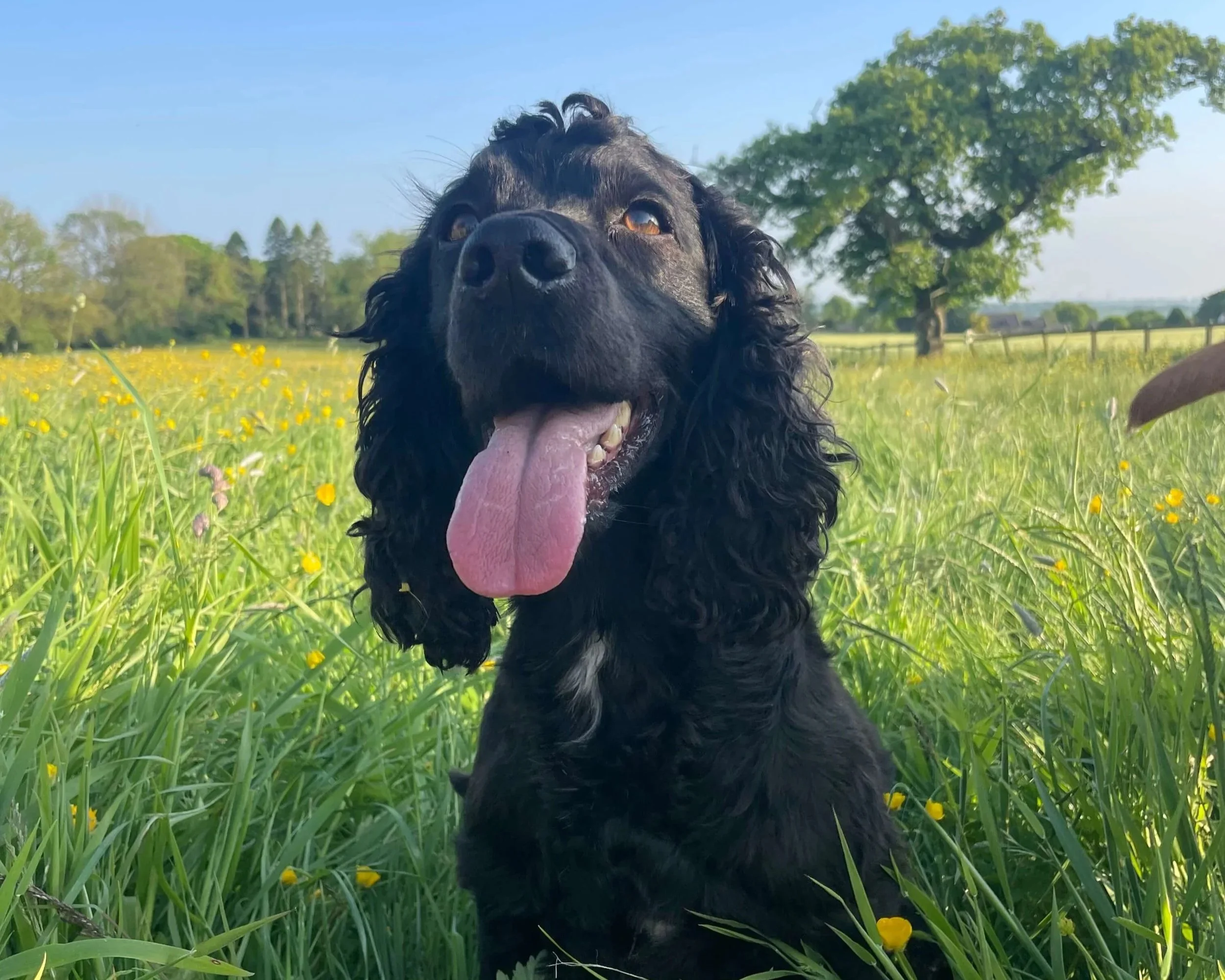
Image: Winston playing in long grass (© Rosie Anderson)
Grass seeds are a very common problem for dogs, especially at this time of year. While walking through long grass, these small seeds can become lodged in a dog's ears or between their toes, causing a lot of pain and irritation.
Signs of a Grass Seed Problem
The signs of a grass seed problem will depend on where the seed becomes trapped. If a grass seed migrates down your dog's ear canal, you may notice a sudden, forceful head shake, often immediately after a walk.
If a grass seed becomes lodged between your dog's toes, the signs can be more difficult to spot straight away. As the irritation develops, you may notice your dog licking their paws excessively or showing signs of a slight lameness. However, the first sign many owners notice is a swollen foot, often with a small discharging point visible between the toes.
In these cases, sedation or a general anaesthetic is often required to safely remove the grass seed, followed by medication to help the area heal and provide some pain relief.
Winston’s Grass Seed Case
Our very own staff dog, Winston, was running through the long grass around the sand dunes last weekend. Once he returned home, he was scratching his ear, rubbing himself on the ground, and was very sheepish when our Veterinary Nurse, Rosie, tried to examine his ear.
Rosie immediately recognised that something was wrong and suspected a grass seed might be the cause.
The following day, Winston was given a light sedation, and our Vet, Sarah, carefully removed two grass seeds from his ear using a specialised instrument called crocodile forceps.
His ear was very inflamed and had even started to bleed slightly. Grass seeds can cause significant damage to the ear canal if left untreated.
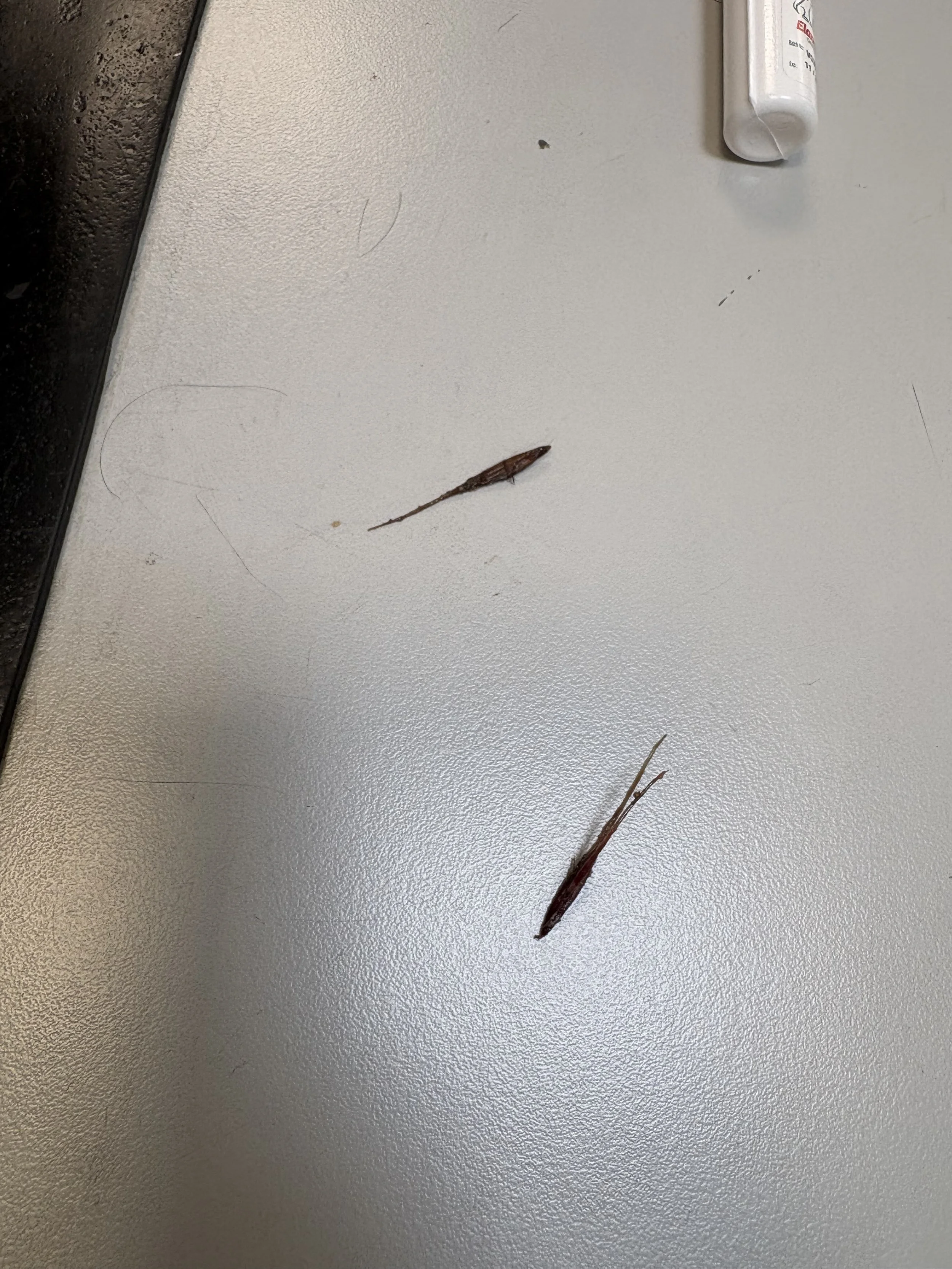
The two grass seeds extracted from Winston’s ear (© Rosie Anderson)
Following the procedure, Winston was prescribed ear treatment to help reduce inflammation and provide pain relief.
Three days later, Winston returned to the practice for a follow-up examination. We were delighted to find that his ear had healed well and was completely clear.
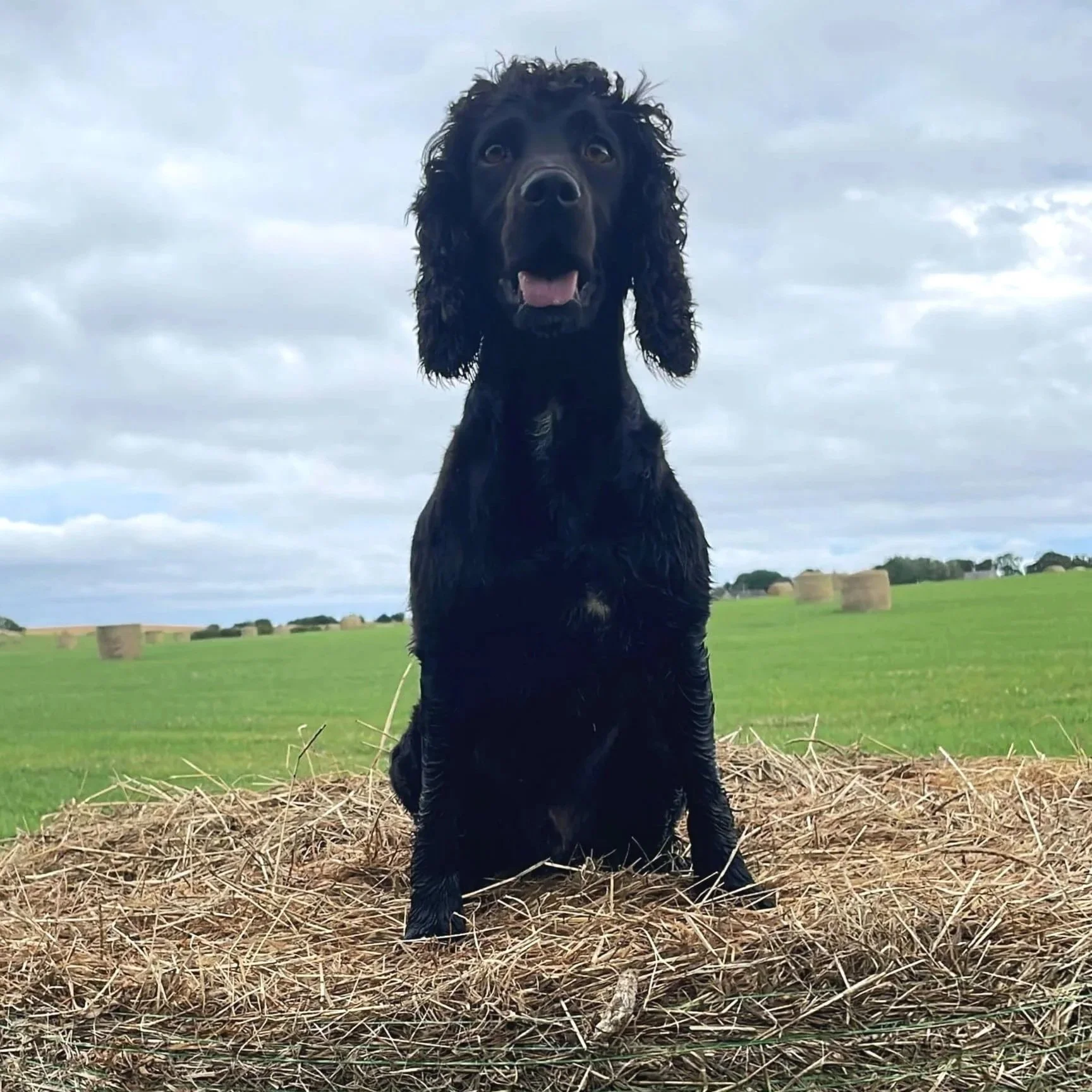
Image: Winston (© Rosie Anderson)
If you suspect your dog may have a grass seed, please contact us as soon as possible so we can examine them and provide the appropriate treatment.
You can also read more about troublesome grass seeds in one of our previous articles here.
