

Image: © Coquet Vets
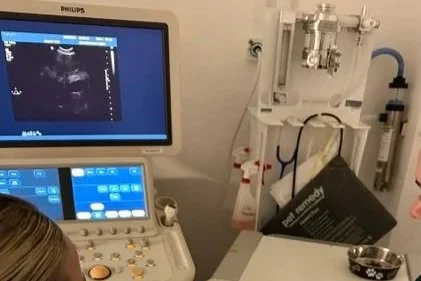
If your pet is feeling unwell, finding the cause quickly and safely is always a priority. One of the most effective ways to investigate internal health concerns is through an abdominal ultrasound that can help us to see what is happening inside your pet’s body in real time.
In our latest article, we tell you more about what to expect if your pet needs an ultrasound scan, and why these
are so important.
What is an abdominal ultrasound?
An abdominal ultrasound is a safe, non-invasive imaging technique that allows us to examine your pet’s internal organs in real time. Using sound waves, ultrasound creates detailed images of structures within the abdomen, helping us investigate a wide range of illnesses and symptoms.
What can an ultrasound show?
Unlike X-rays, which mainly show the size and shape of organs, ultrasound allows us to assess the texture, structure and movement of internal organs such as the liver, kidneys, spleen, bladder, stomach and intestines.
Ultrasound can help diagnose conditions including bladder stones, liver disease, pancreatitis, kidney disease, intestinal problems, tumours, and fluid within the abdomen.
What happens during the procedure?
Most pets tolerate an ultrasound very well. A small area of fur is usually clipped from the abdomen so good contact can be made with the ultrasound probe. Gel is then applied to the skin to help produce clear images.
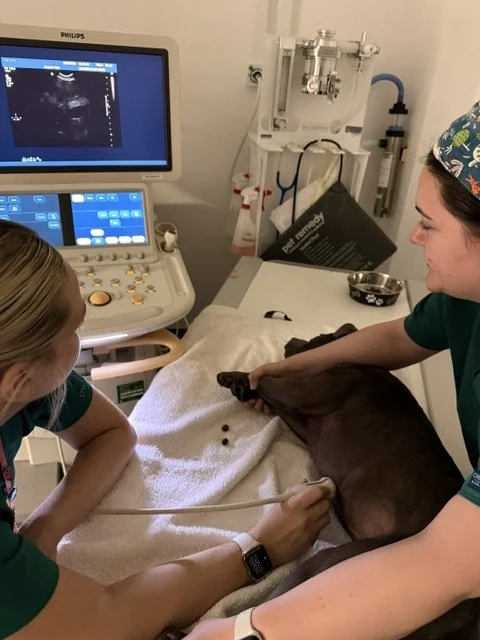
Image: © Coquet Vets
Many patients can have the procedure performed while awake, although some nervous pets or more complex cases may require light sedation to help keep them comfortable and still. The scan itself is painless and typically takes between 20–45 minutes depending on the reason for the examination.
Why is ultrasound important?
Early diagnosis can make a significant difference in treatment options and outcomes, especially for older pets or those with ongoing health concerns.
Abdominal ultrasound provides valuable information quickly and safely, allowing us to investigate concerns without surgery in many cases. It can also help guide procedures such as urine sampling or taking small tissue samples if required.
If you have any questions about abdominal ultrasounds or would like to discuss whether your pet may benefit from one, please contact the practice and our team will be happy to help.
