


A tick (Image by Catkin)
Ticks are external parasites that live in wooded or grassy areas. They wait on vegetation to attach to passing hosts. Ticks are blood sucking arachnids and can transmit diseases like Lyme disease whilst feeding.
Ticks appear as small, grey-brown, wart like bumps that swell when they are full. They are commonly found around a dog’s head, neck, ears, and feet.
Symptoms of a tick bite include a visible bump on the skin and redness or irritation. You may also notice you pet excessively licking, scratching, and/or shaking their head.
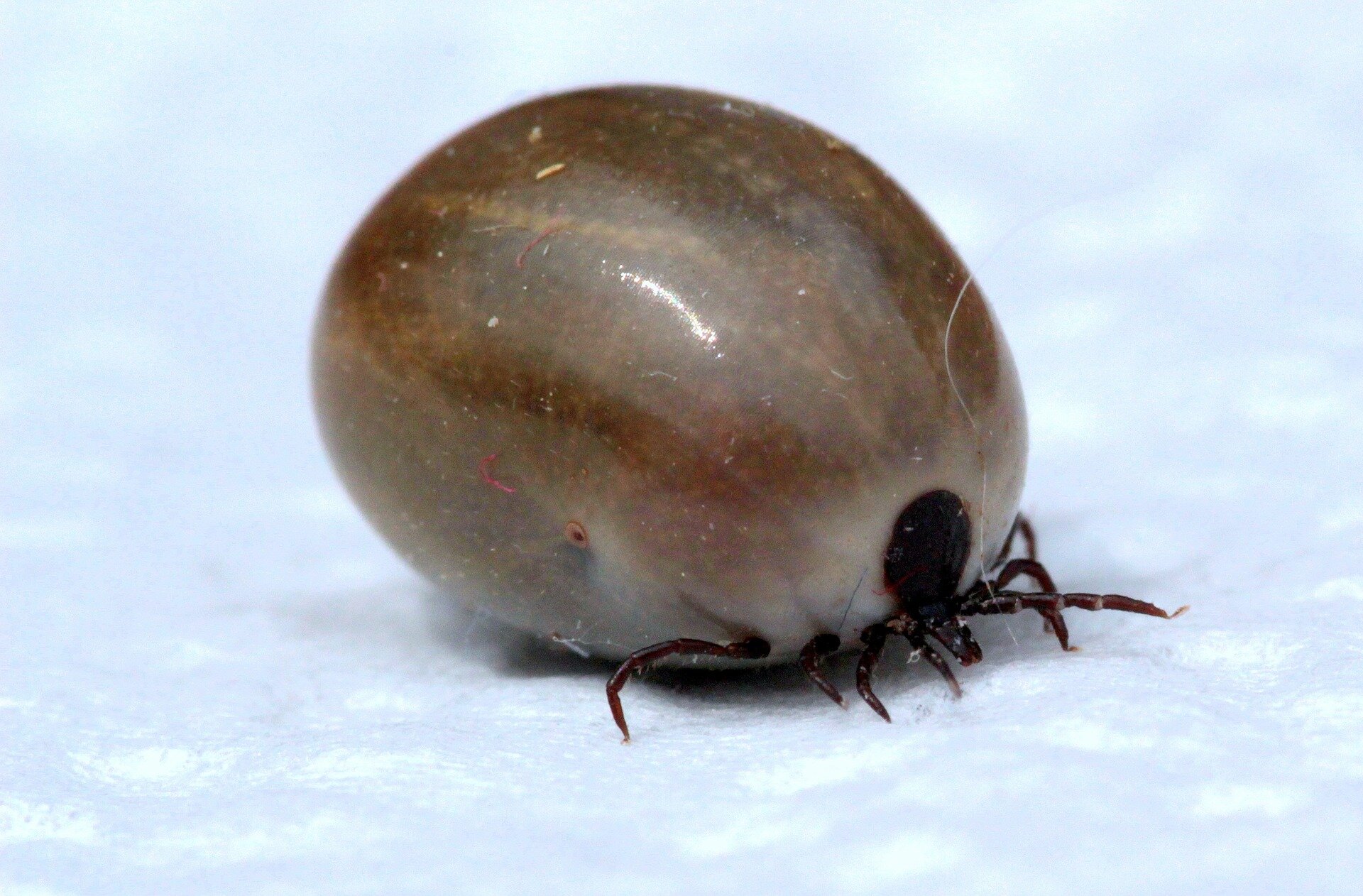
Close up of a tick (Image by Myriams-Fotos)
As tick bites can carry diseases, it is important to remove them straight away. It is vital that you do not squeeze the tick’s body or leave the head in. This can push the blood back into your pet and increase the chance of them getting a disease. The best way to remove a tick is by using a tick removal tool, which twists the tick off. These can be purchased from pet shops or the vets.
Using a tick treatment will ensure that if your pet gets bitten by a tick, it is killed within 24 hours. The treatment does not stop ticks from biting your pet, but it ensures they are killed promptly before the transmission of disease.
Please see our step-by-step guide below on how to safely remove a tick.
How to safely remove a tick
Identify - Ensure it is a tick that you are dealing with and not a lump or nipple. Closely look at the tick’s legs to double check.
Position the removal tool - Slide the tool under the tick as close to the skin as possible. Consider using a different size tool if necessary.
Twist - Gently twist the tool a few times in the same direction, without pulling upwards. The tick will let go when you have twisted enough.
Dispose - Dispose of the tick safely in your bin to ensure it does not attach to anyone else.
Clean and monitor - Clean the area with salty warm water and monitor your pet for any signs of illness.
If you are a client of Coquet Vets and this article has raised any questions or concerns, please contact us on 01665 252 250 or email us at info@coquetvets.co.uk
