
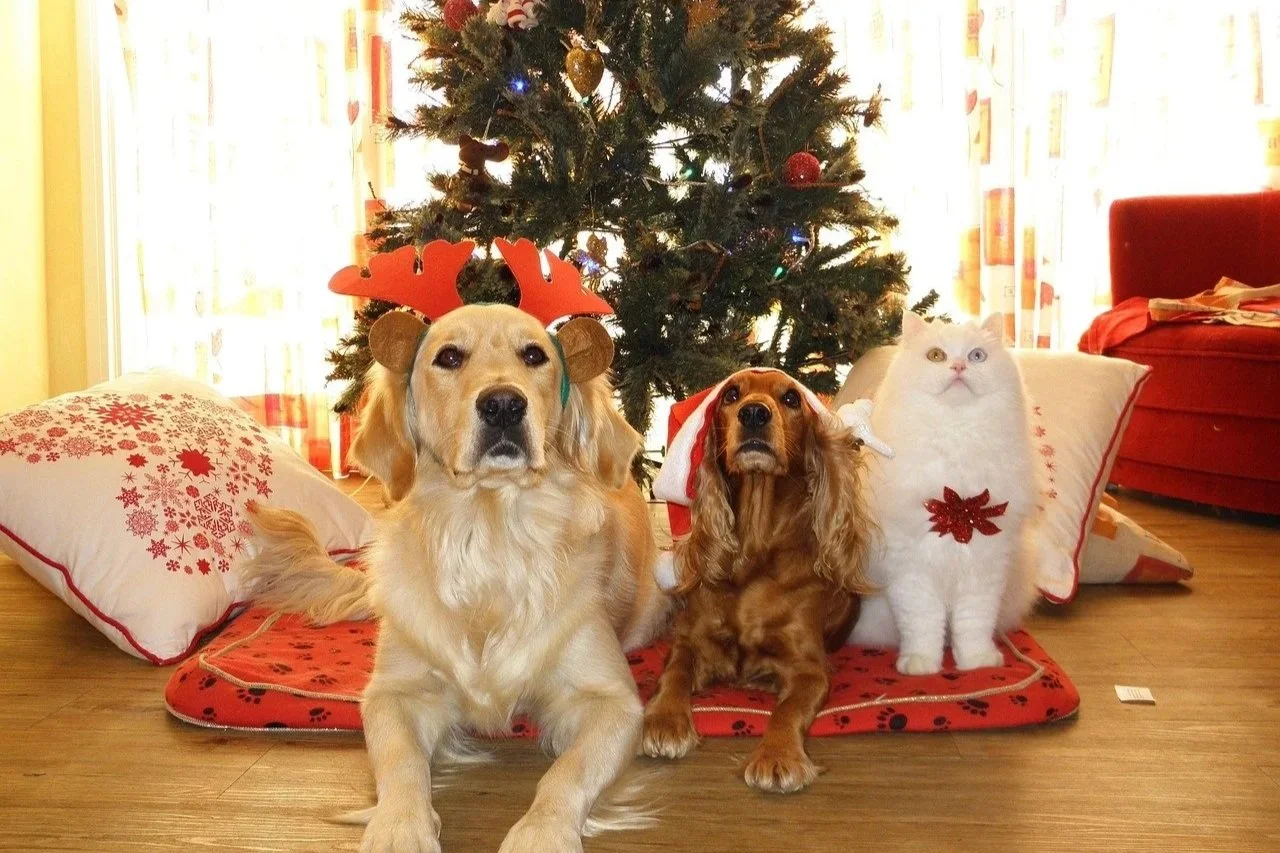
Image by Oli R from Pixabay
Christmas is a time for family, friends, and festive traditions, but while we’re all celebrating, it’s easy to forget that the festive season can bring hidden dangers for our pets. Every year, we see dogs and cats coming in for an unplanned visit and emergency treatment after nibbling on something they shouldn’t! However, with a little planning, you can keep your furry friends safe while still including them in the festivities.
Here’s what to watch out for this Christmas:
Grapes, Raisins & Sultanas
Mince pies, Christmas pudding, and fruitcake are festive favourites for us, but many of the ingredients they contain are highly toxic for dogs. Even small amounts of grapes, raisins, or sultanas can cause symptoms of vomiting, diarrhoea, and, in severe cases, kidney failure. Ingesting these foods can prove fatal, so it is essential to act quickly.
What to do if your dog eats this: Call us immediately. Even if your dog appears fine initially, don’t wait to call us. Symptoms can be delayed, but potentially fatal.
Treatment typically involves inducing vomiting, giving activated charcoal to help prevent further absorption in the stomach, and then monitoring kidney function with blood tests. If we suspect kidney damage, we may even provide intravenous fluids to give your pet the best chance of survival.
Safety Tip: Always keep festive foods out of reach of your dog and educate your guests, so they don’t give human treats to your dog or cat. Promptly clean up any spills and dropped food that contain these ingredients. Keep pet-friendly treats to hand so your pet doesn’t feel left out.
Macadamia Nuts
At Christmas time, macadamia nuts are often included in festive snacks, but they’re harmful to dogs if eaten. If ingested, symptoms can include hind-leg weakness, lethargy, vomiting, tremors, and fever. While rarely fatal, the symptoms can cause serious discomfort and be very distressing for the dog and the owners.
What to do if your dog eats this: If you have any concerns about your pet or any developing symptoms, call us immediately for advice.
Safety Tip: Always keep nut bowls away from low tables and surfaces where your dog can reach it and promptly clean up any spills and dropped nuts.
Chocolate
From advent calendars to tree decorations, chocolate is everywhere at Christmas! Whilst it’s a festive favourite for many of us, it’s highly toxic to dogs. Chocolate contains theobromine and caffeine, which are compounds that dogs cannot metabolise efficiently. Dark chocolate is the most dangerous for dogs, as it has a high theobromine content.
Signs of chocolate poisoning include restlessness, rapid heart rate, and seizures. In severe cases, it can be fatal.
What to do if your dog eats this: If you think your pet has eaten chocolate, please call us immediately for advice. Even if your dog appears fine initially, don’t wait to call us. Symptoms can be delayed, but potentially fatal. See our article on chocolate poisoning for more information.
Safety Tip: Always store chocolate up high and well out of reach of your pets. If you have a dog, it is best to avoid edible tree decorations altogether. It’s just not worth the risk!
Rawhide & Bones
It’s tempting to give your dog a bone as a festive treat or a present to include them in the gift-giving tradition of Christmas, but this is best avoided. Rawhide and bones can splinter, causing severe health issues, such as choking, obstructions in the digestive system, and even internal injuries.
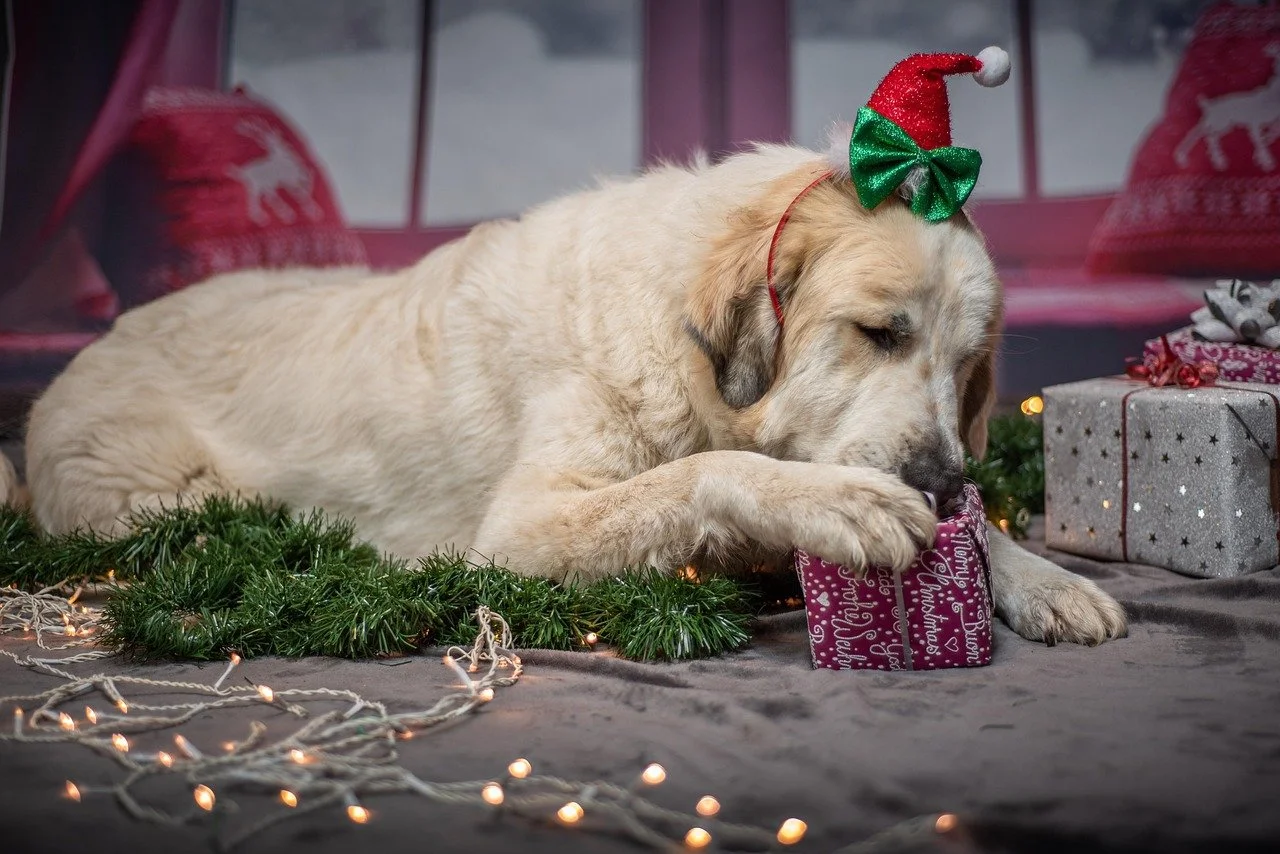
Image by Sven Lachmann from Pixabay
What to do if your pet eats this: Cases of choking and blockages are emergencies, so if your dog has been chewing a bone or rawhide and you have any concerns about your pet, call us immediately for advice.
Safety Tip: Only give your pet vet-approved chews or toys as a festive treat or gift.
Festive Decorations
A festive tradition at Christmas is decorating a tree. However, baubles, tinsel, and small ornaments can be choking hazards or cause intestinal blockages if swallowed. This can require surgery to correct the blockage and remove the hazard. Broken decorations can also cut paws.
What to do if your pet eats this: Cases of choking and intestinal blockages are emergencies, so please call us immediately if you suspect your pet has eaten any kind of festive decorations.
Safety tip: Hang fragile decorations higher up your tree and ensure they are well secured. Check regularly for any fallen items - especially if you have an enthusiastic tail-wagger!
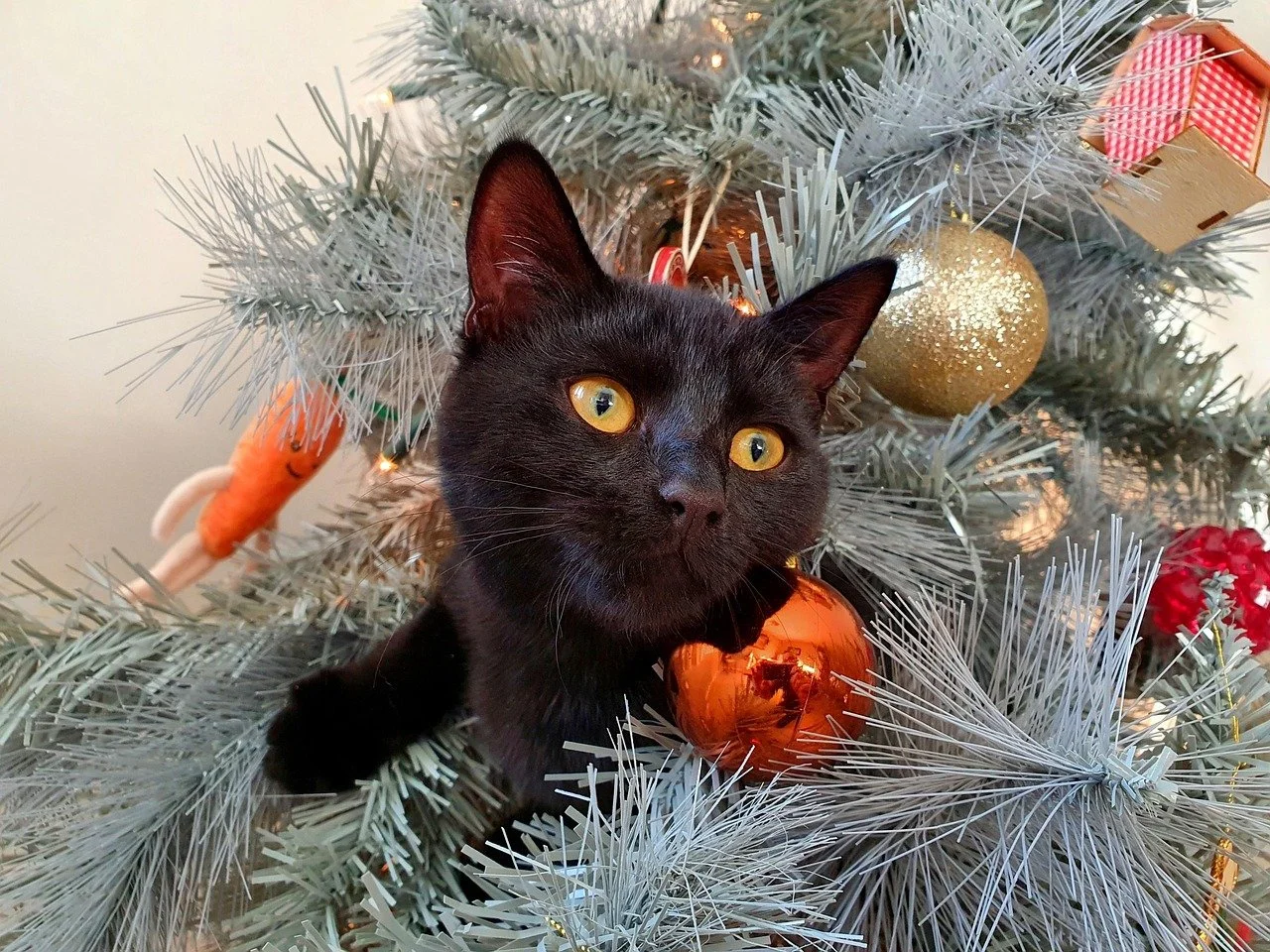
Image by Brendan Stramrood from Pixabay
Some tips for a pet-safe Christmas
Secure all festive foods: Keep grapes, raisins, sultanas, chocolate, and nuts out of reach.
Store leftovers safely: Prevent pets from accessing bins or counters.
Keep chocolate decorations off the tree: They’re tempting and toxic!
Educate guests: Remind visitors not to feed pets any human treats.
Avoid rawhide and bones: Choose safe, pet-friendly gifts instead.
Provide pet-safe alternatives: Offer vet-approved chews and treats.
Decorate wisely: Hang fragile ornaments high and check for fallen decorations.
Download and print out our handy Christmas Pet Safety Guide for 2025 to stick on your fridge at home:
You can also find more information and advice on hidden hazards over Christmas time in this ‘Xmas Pet Dangers’ poster created by TVM-UK Animal Health poster:
This article covers some of the main cases we see around Christmas time, but it doesn’t cover everything, so always be aware of what is around your home and keep an eye on your pets over the festive season.
If you suspect your pet has eaten something harmful, or you have any concerns about your pet, please call us immediately at Coquet Vets on 01665 252250. For out-of-hours or emergencies, see our information page here.
