


Coquet Vets pet dental room (© Coquet Vets)
Feline calicivirus is a common cause of oral and respiratory disease in cats, and in some cases, it can lead to severe inflammation, pain, and long-term dental complications. In this case study, we look at how calicivirus affected Maddie, her symptoms, the treatment she received, and how to reduce the risk of feline calicivirus.
What is calicivirus?
Calicivirus is a common and contagious virus in cats that causes respiratory issues, mouth ulcers, and sometimes joint pain or more severe symptoms.
Maddie came to see us at Coquet Vets as she was suffering from calicivirus. Her main symptoms were dental disease, oral pain, severe gingivitis, and stomatitis (inflammation of the mouth’s lining). This is a debilitating and painful condition, and most of Maddie’s teeth had to be removed.
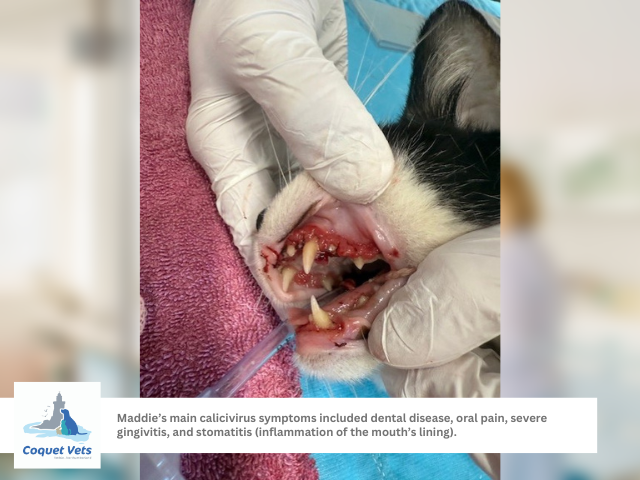
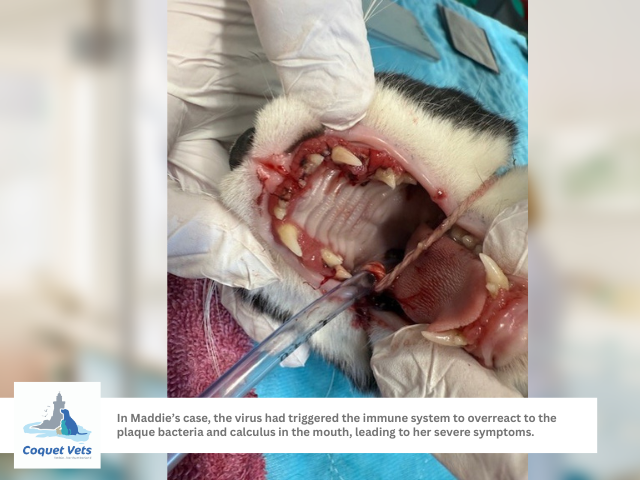
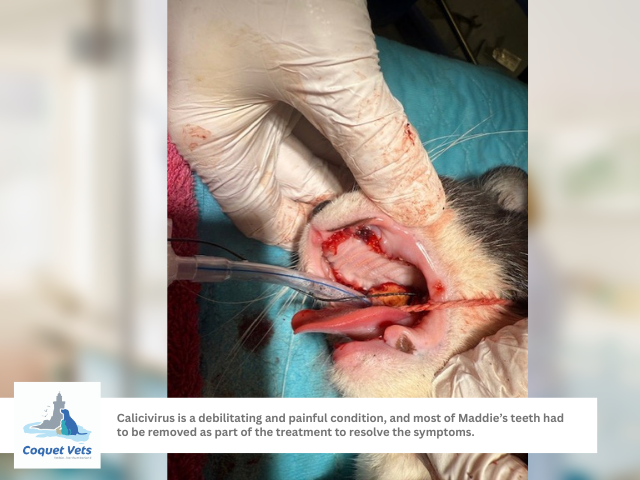
In Maddie’s case, the virus had triggered the immune system to overreact to the plaque bacteria and calculus in the mouth, leading to her severe symptoms.
Cats can also display respiratory signs such as a runny nose or runny eyes. Other symptoms relating to dental disease include drooling, reduced appetite, difficulty eating, and halitosis. You may also notice reduced grooming and decreased interactivity in your cat if they are suffering from calicivirus.
What is the risk of my cat catching calicivirus?
Calicivirus in cats is shed in secretions from the nose, mouth, and eyes. A cat can become infected by direct contact with secretions containing the virus from another cat, or indirectly through contaminated objects such as carriers, food and water bowls, or surfaces. Calicivirus is often more prevalent when cats are kept in large groups.
How can I reduce the risk of calicivirus for my cat?
Vaccination and minimising cat-to-cat exposure, especially in multi-cat environments, are key to preventing infection and limiting spread. Kittens and young adult cats are usually at the highest risk for infection, but cats of any age can be affected.
If this article raises any concerns, or you suspect that your cat is suffering from calicivirus, please contact us at Coquet Vets on 01665 252 250.
